Posts mit dem Label Stadium werden angezeigt. Alle Posts anzeigen

Samstag, 4. Dezember 2010

Suzuka Circuit

Suzuka Circuit
Suzuka Circuit

Suzuka International Racing Course (鈴鹿サーキット, Suzuka Sākitto?), Suzuka Circuit for short, is a motorsport race track located in Ino, Suzuka City, Mie Prefecture, Japan and operated by Mobilityland Corporation, the subsidiary of Honda Motor Co., Ltd..

Suzuka Circuit
Suzuka Circuit

Suzuka Circuit
Suzuka Circuit

Designed as a Honda test track in 1962 by John Hugenholtz, Suzuka is one of few circuits in the world to have a figure 8 layout, with the back straight passing over the front section by means of an overpass.

The circuit can be used in three configurations; the full circuit, the "Suzuka East" and "Suzuka West" configuration. The "East" portion of the course consists of the pit straight to the first half of the Dunlop curve (turn 7), before leading back to the pit straight via a tight right-hander. The "West" course is made up of the other part of the full circuit.
Suzuka Circuit
Suzuka Circuit

Suzuka Circuit
Suzuka Circuit

Shanghai International Circuit

Shanghai International Circuit

The Shanghai International Circuit (simplified Chinese: 上海国际赛车场; traditional Chinese: 上海國際賽車場; pinyin: Shànghǎi Guójì Sàichēchǎng) is a Chinese motor racing venue, situated in the district of Jiading near Shanghai in the People's Republic of China. It was the venue of the inaugural Formula One Chinese Grand Prix on 26 September 2004.


Shanghai International Circuit

Shanghai International Circuit

Shanghai International Circuit

Shanghai International Circuit


Layout

In common with many other new Formula One circuits, it was designed by Hermann Tilke, and also features his trademark track feature: a long back straight followed by a hairpin turn. Current-generation F1 cars can easily surpass 300 km/h (186 mph) on the long straight between corners 13 and 14. The track layout was inspired from the Chinese character shang (上) the first character in the name of the city Shanghai, meaning "above" or "ascend". One lap lasts 5.5 kilometres (3.4 miles). The whole circuit plus seating areas and other areas for spectators, covers a total area of 5.3 km².

Tokyo Racecourse

Tokyo Racecourse
Tokyo Racecourse

Tokyo Racecourse (東京競馬場, Tōkyō Keiba-jō?) is located in Fuchu, Tokyo, Japan. Built in 1933 for horse racing, it is considered the "racecourse of racecourses" in Japanese horseracing. It has 13,750 seats, with a capacity of 223,000.

Tokyo Racecourse hosts numerous G1 (Grade 1) races, including the Japan Cup, Tokyo Yushun (the Japanese Derby) and the Yasuda Kinen, a part of the Asian Mile Challenge.

Tokyo Racecourse
Tokyo Racecourse

Tokyo Racecourse
Tokyo Racecourse

Tokyo Racecourse
Tokyo Racecourse

Tokyo Racecourse
Tokyo Racecourse

Arosvallen

Arosvallen
Arosvallen

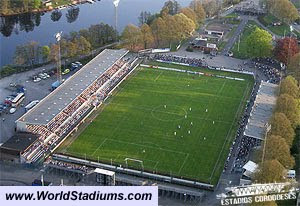
Arosvallen is a multi-use stadium in Västerås, Sweden. It is mostly used for football games. It is the home stadium for the division 1 Football team Västerås Roedeers.

The stadium hosted two 1958 FIFA World Cup games were played, Yugoslavia - Scotland and Yugoslavia - France. It also hosted four group matches, a quarterfinal, and a semifinal in the 1995 FIFA Women's World Cup.

Arosvallen
Arosvallen


Arosvallen
Arosvallen

Arena Amazonia

Arena Amazonia
Arena Amazonia

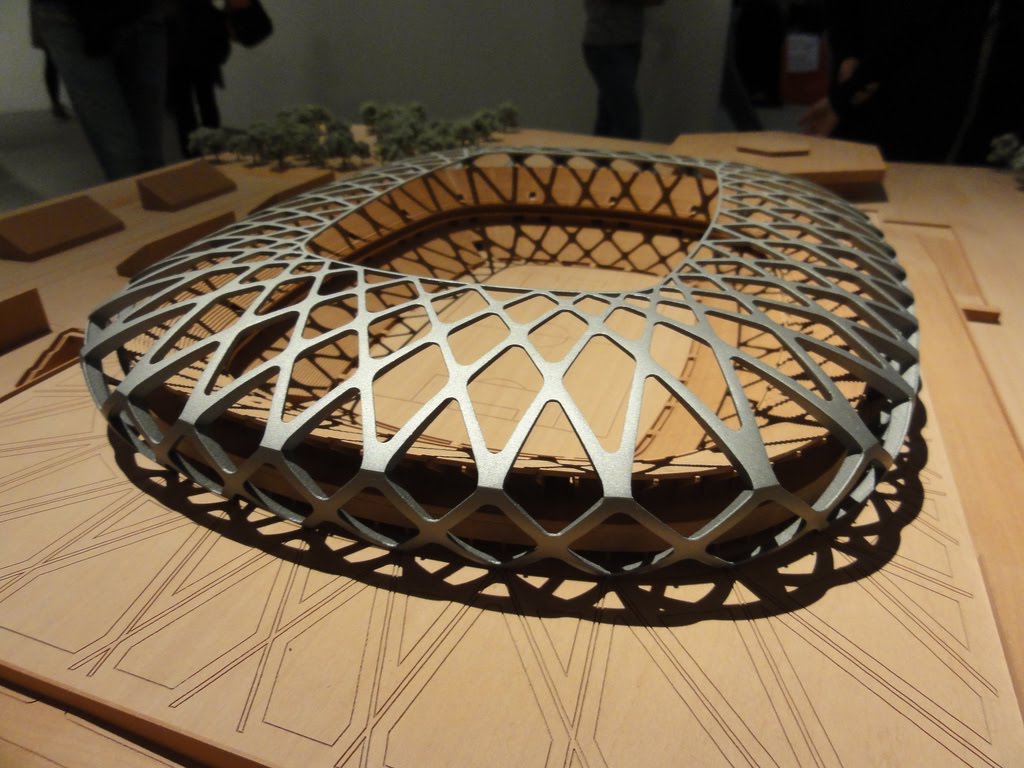
Arena Amazonia is the name of a football stadium in Manaus, Amazonia, Brazil to be located on the current site of the Vivaldão stadium. The stadium will have a all-seater capacity of 46,000 and will be constructed from 2010 to 2012. It will host matches of the 2013 FIFA Confederations Cup and the 2014 FIFA World Cup.

Arena Amazonia
Arena Amazonia


Arena Amazonia
Arena Amazonia

Allianz Arena

Allianz Arena
Allianz Arena


The Allianz Arena is a football stadium in the north of Munich, Germany. The two professional Munich football clubs FC Bayern Munich and TSV 1860 München have played their home games at Allianz Arena since the start of the 2005–06 season. Both clubs had previously played their home games at the Munich Olympic Stadium since 1972, where FC Bayern Munich played all of their games and TSV 1860 München most of their games.

The large financial services provider, Allianz purchased the rights to name the stadium for 30 years. During the 2006 World Cup it was known as FIFA World Cup Stadium Munich.

The stadium will be the venue for the 2012 UEFA Champions League Final.
Allianz Arena
Allianz Arena


Former names FIFA World Cup Stadium Munich
(during the 2006 FIFA World Cup)
Location Munich, Germany
Broke ground October 21, 2002
Opened May 30, 2005
Owner Allianz Arena München Stadion GmbH
Operator Allianz Arena München Stadion GmbH
Surface Grass
Construction cost € 340 million
Architect Herzog & de Meuron
ArupSport
Capacity 69,901 (seating and standing)
66,000 (seating only)
Executive Suites 106
Field dimensions 105m x 69m
Tenants
FC Bayern Munich
TSV 1860 München

Allianz Arena
Allianz Arena